

2026-10-10 09:24:18
Curved tempered glass has become one of the most versatile materials in modern architecture. Its combination of strength, safety, and free-form geometry allows designers to create facades and interiors that would be impossible with flat glass alone. This article explains what curved tempered glass is, how it is produced, and where it is best applied.
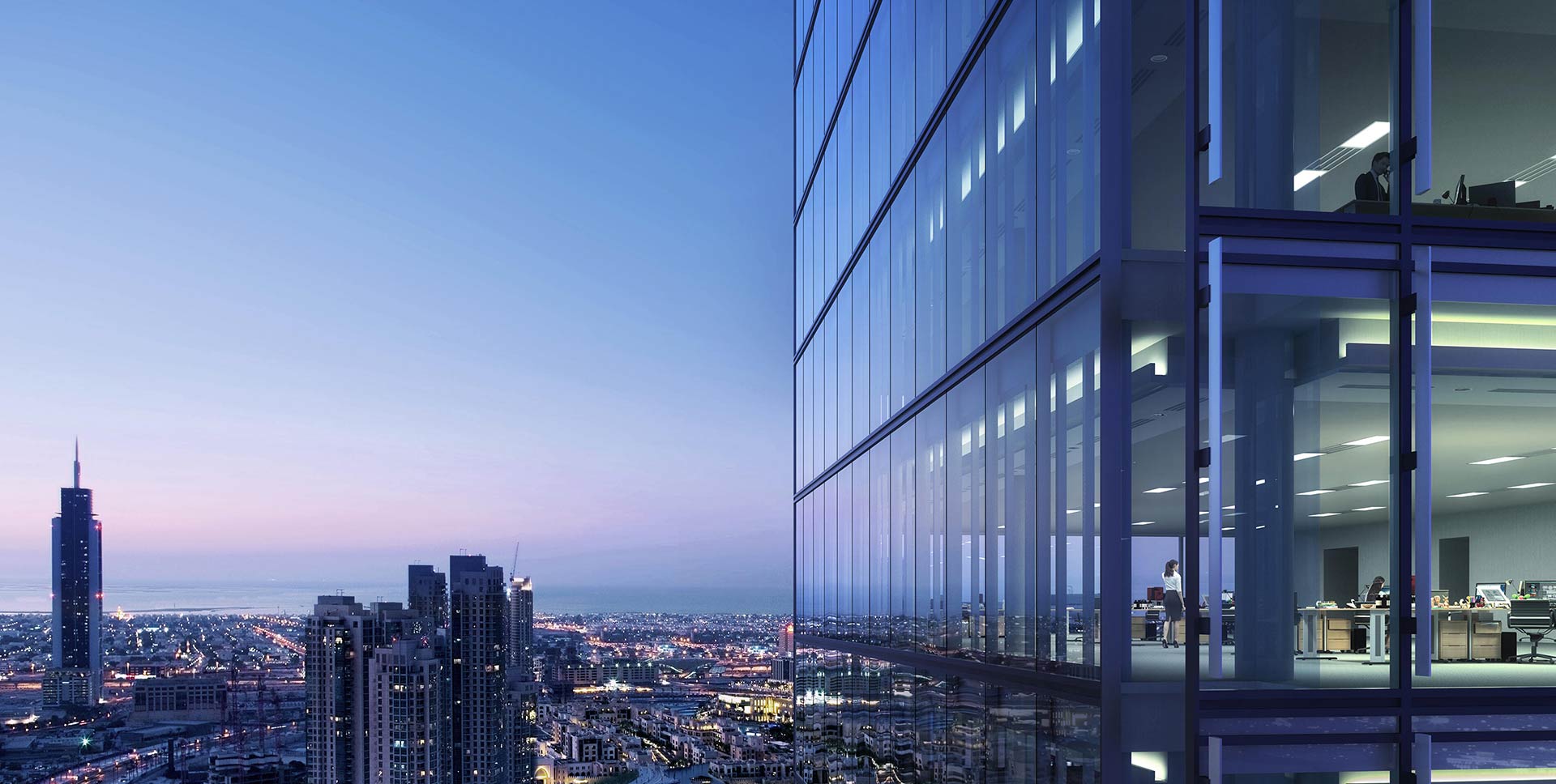
Curved tempered glass is glass that has been bent to a controlled radius and then thermally tempered. The bending gives the glass its shape, while the tempering process gives it strength and a safe breakage pattern.
Unlike annealed glass, which breaks into sharp shards, tempered glass breaks into small, blunt fragments. This makes it a safety glass suitable for applications where human contact is likely.
Production starts with a flat glass sheet cut to size and edge-worked. The sheet is heated to around 650–700 °C until it becomes soft enough to bend, then formed over a curved mold or pressed between curved rollers.
Immediately after bending, the glass is rapidly cooled by forced air. This quenching creates permanent compressive stress on the surface and tensile stress in the core, which is what gives tempered glass its strength — typically four to five times that of annealed glass of the same thickness.
Because tempering cannot be done after cutting or drilling, every hole, notch, and edge must be finished before the glass enters the furnace. This makes accurate design and measurement critical.
Curtain walls and facades. Curved panels give buildings a smooth, continuous surface, allowing cylindrical towers, rounded corners, and flowing elevations without the visual breaks that flat panels introduce.
Atriums and skylights. Large curved glazed roofs benefit from the strength of tempered glass and the light transmission that only glass can provide.
Balustrades and railings. The safety breakage pattern makes curved tempered glass a natural choice where a transparent barrier is required.
Interior design. Curved glass partitions, shower enclosures, and furniture elements use smaller-radius bends to soften interior spaces.
Radius and size. Every curved panel has a minimum bending radius that depends on glass thickness. Tighter radii require thinner glass, which affects load capacity — the two limits must be balanced.
Thickness and span. Thicker glass carries more load but is harder to bend to small radii. Structural calculations should drive thickness selection rather than appearance alone.
Coating and treatment. Low-E coatings, laminated interlayers, and heat-soak testing can all be combined with curved tempered glass. Each addition affects production lead time and should be specified early.
Installation tolerance. Curved panels must match the frame and the adjacent panels. Tolerances for radius, chord height, and edge squareness should be agreed at the design stage.
Curved glass opens design possibilities that were once limited to specialist projects. It allows a building's glazing to follow the structure's geometry rather than the other way around, and it does so without sacrificing safety or durability.
When specified correctly and produced to tight tolerances, curved tempered glass becomes both a functional building component and a defining architectural feature.
Curved tempered glass combines the safety of tempered glass with the freedom of curved geometry. Success depends on getting the design details right early — radius, thickness, coating, and tolerances — because tempering locks the glass into its final shape. Chosen well, it delivers a facade that is strong, safe, and visually distinctive.
Working with an experienced curved glass manufacturer helps ensure that the design intent survives the transition from drawing to installed panel.

Building 1, No. 82 Chaodong Road, Chashan Town, Dongguan City, Guangdong Province
+86 13725796789
Copyright © 2026 Dongguan Yinjian Glass Engineering Co., Ltd All Rights Reserved